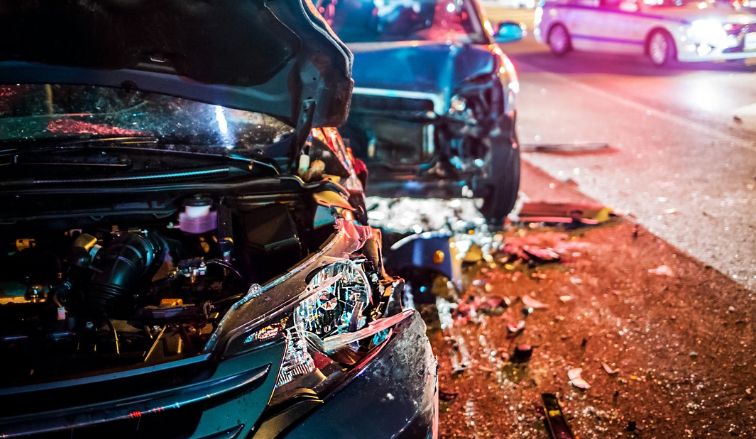
Next to treating injuries, replacing a vehicle is among the chief
concerns following an auto accident. We rely so much on our transportation,
whether it’s getting to work, picking the kids up from sports practice, or
bringing home the groceries. The cost
of purchasing a new vehicle has increased dramatically in
recent years and most of us don’t have an extra $30,000 sitting in the bank.
Knowing that insurance will cover the cost of a totaled car is a huge relief, but the average person doesn’t know much about the policy stipulations. Insurance is designed to help you through times of hardship, but all too often, policyholders have to hire a team of New York City personal injury lawyers to represent their best interests in negotiating fair total loss settlements.
Injured in a car accident? Tap to call for a FREE consultation!
When Will Insurance Pay for A Total Loss?
A total loss is determined if your vehicle cannot be repaired
safely or if the cost of repairs is worth more than the car’s value.
Specifically, in New York State, vehicles that are worth 75%or less of their pre-accident value are deemed “total losses.”
There are two optimal scenarios where your insurance provider buys
you a new car without much hassle:
- If your car is three months old or less.
- If you purchased optional gap insurance to cover your loan
balance.
Payment in these cases can arrive in as little as one to three days. In any other scenario, getting the insurance company to pay off your loan and buy you a new car could prove challenging. Tack on a few extra days for a claims adjuster to look at your car. In complicated cases, negotiations between your personal injury attorney and the insurance companies can take up to 30 days to reach a fair offer.
Then they are only required to “make you whole” by paying you what
your car was worth at the time, before the accident. There is much room for
error and negotiation here. If you still owe a hefty sum to your loan provider,
you could end up with far less for your vehicle than you deserve— paying off a
car loan for a car you no longer drive and dipping into your crucial emergency
savings to make new car payments.
For instance, if the KelleyBlue Book value of your car is $12,000 and, with the financing charges, you still
owe $14,500 on your loan, the insurer will only give you the $12,000 check –
leaving you without a car and with a $2,500 bill to your loan provider. The
insurer has the right to take your totaled car and sell it for parts, leaving
you with nothing.
How Do Insurers Determine How Much Your Car Is Worth?
What is “fair market value” anyway? Kelley Blue Book is typically
consulted to arrive at a ballpark figure, but other factors go into determining
your vehicle’s condition. Classifications include:
- Excellent – You’re among the elite 5 percent if your vehicle is considered “excellent.” Your vehicle looks new. It has a clean title history with no history of paint or bodywork. It’s free from rust, fluid leaks, tire wear, or defects. Service records are complete and verifiable.
- Good – Most vehicles are considered “good” with no major defects in mechanics, interior, paint, or body, and a clean title history. Some reconditioning may be needed to bring the vehicle up to retail value, but the substantial tire tread and rust-free exterior make it a good sale.
- Fair – You may have some mechanical or cosmetic defects, but a fair vehicle is still in reasonable running condition. Though the title history is clean, the paint, body, interior, and tires may need replacing or restoration. There may be some visible rust damage.
- Poor – These vehicles may have a history of accidents, no maintenance history, multiple mechanical failures, or poor running condition. The frame may be damaged, the body rusted, the tires worn, or the mileage is extremely high. An independent appraiser may be needed to determine its value.
We Are Available for You 24/7.
Call 646-594-1112 for a Free Consultation
When Will Insurance Refuse to Pay For A Total Loss?
Since New York is a “no-fault” insurance state, you don’t have to
worry about proving who caused the accident. Even if you were at fault, your
auto insurance policy is responsible for covering your losses. However, certain
situations could nullify your insurance policy— for instance, if you were
operating your vehicle in a manner that was “grossly negligent” or “reckless,”
such as street racing or drunk
driving. In these instances, your insurer could deny your claim. You will
be deemed responsible for “intentional misconduct” and may have your policy
canceled.
Get the Recovery You Deserve – Talk To A Car Accident Lawyer Today!
What If You Disagree with Your Insurer’s Total Loss Assessment?
If you disagree with your insurer’s total loss assessment or vehicle valuation, the New York City car accident lawyers of Douglas & London can help. We can comb your policy to look for every avenue to get you more money. We will assemble hard evidence to prove the condition of your car— whether it’s a current photograph, history of upgrades, or testimony from your repair shop. Our independent third-party appraisers are qualified to provide a professional opinion well beyond the online car value calculators. Contact us for a free consultation. You pay nothing upfront for our services.