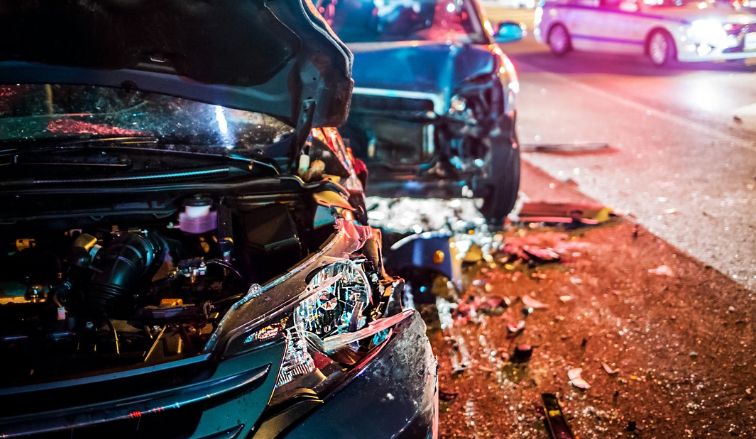
The short answer is that you CAN sue for emotional distress after your involvement in a car accident. From a legal standpoint, your ability to receive compensation for emotional distress will hinge upon the ability of your personal injury attorney to demonstrate the negative effect the accident has had on your day-to-day life and your attorney’s ability to construct a strong legal argument for liability that makes it clear your symptoms were directly caused by the other party’s negligence, the crash, and not some other cause.
Please note: Douglas & London only accepts cases in New York, New Jersey, and Connecticut. We cannot accept cases outside of those areas.
Emotional distress is a type of
‘pain and suffering’ damage.
Following a car accident,
plaintiffs can generally sue for monetary damages (such as medical bills,
medications, assistive technology, and lost wages), as well as for non-monetary
damages, like pain and suffering, which includes:
- Disfigurement
- Emotional distress
- Loss of companionship
- Loss of consortium
- Loss of enjoyment in life
- Emotional injuries
- Physical impairment
The legal definition of “emotional
distress” is “a highly unpleasant
emotional reaction resulting from another’s conduct, for which damages may be
sought.” You may, for instance, fear getting behind the wheel, driving in
adverse weather conditions, or even traveling in a motor vehicle someone else
is driving.
You
may suffer from panic attacks, depression, guilt, or suicidal thoughts that
make it difficult to get through the day. It may become difficult to go to
work, care for your family, or care for yourself.
If you are experiencing any of these forms of emotional distress, it is very important that you discuss these symptoms with your doctor and get appropriate treatment. Also, communicate these symptoms to your team of New York City car accident lawyers, so that these damages are included in your car accident lawsuit claim.
Schedule Your Free Consultation with a Car Accident Lawyer Today!
The
infliction of emotional distress can be intentional or negligent.
In
constructing a strong legal claim, your attorney must determine whether the
infliction of emotional distress was intentional or negligent in nature. For
instance, if the other driver purposefully crashed into your car as an act of
road rage or was attempting to goad you into a street race, it could be argued
the infliction of emotional distress was intentional. These cases generally
involve defendant behavior that is widely viewed as “extreme,” “shocking,”
“outrageous,” and “intolerable by society.”
On
the other hand, the emotional distress will be considered “negligent” if the
other driver violated a statutory duty and broke a law – like texting while
driving, falling asleep at the wheel, or driving through a red light.
We Are Available for You 24/7.
Call 646-594-1112 for a Free Consultation
Emotional
distress could add on a substantial sum to a settlement or jury award.
Emotional distress can tack on a
significant amount of additional compensation. The courts may take one of two
approaches to calculating “fair and reasonable” damages related to
the harm you have suffered. Most commonly, they add up the past, present, and
future economic damages and multiply the total by 1.5 to 5, depending on the
severity of the emotional distress you suffer. Another method of calculation
involves adding up your direct expenses (such as doctor’s visits, therapy
sessions, medication, and lost income) and multiplying that by how many days
you are expected to be impaired for a “per diem” amount.
Unlike some states, New York does
not put a cap on non-economic damages, so you could recover more than $750,000.
Call now for a FREE consultation!
How do you prove emotional
distress?
The strongest emotional distress
claims involve:
- Physical effects (like digestive upsets, fatigue, headaches,
frequent infections, or cold sores) - Psychological effects (like depression, anxiety, or PTSD)
- Mental health provider confirmation (new diagnosis, prescription
drug, or therapy sought) - Severe intensity of distress (that interferes with school, work,
or family care) - Extended duration (with effects lasting months or years)
In addition to a mental health
professional’s testimony, copies of medical records, daily symptom diaries, and
witness testimony, published medical research can be used to lend credence to
your case. For instance, a meta-analysis of studies associated musculoskeletal
injury, spinal cord damage, and traumatic brain injury with greater instances
of lasting impairment from emotional distress.
Your family members may qualify for emotional distress damages, too.
While rare, attorneys
sometimes argue for the awarding of emotional damages to spouses or children
who witness the accident. Even though they were not directly physically harmed,
the 1968 case of Dillon v. Legg
demonstrated that members of the
household can suffer greatly.
So, yes, you (and, quite possibly, your family members) may seek emotional distress damages after a car accident. Contact the New York City personal injury lawyers at Douglas & London for a free consultation. We will fight every step of the way for the full value of your claim. Trust in our track record: Our attorneys have recovered $20 billion for their personal injury clients.