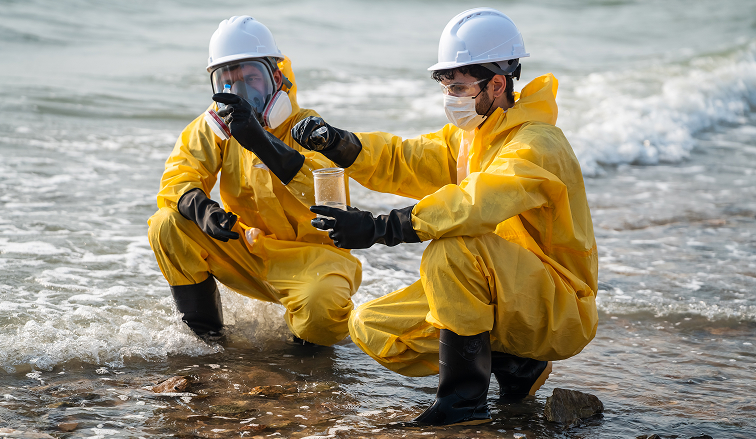
A new documentary called In Our Blood: The Forever Chemicals Scandal puts a name to something many families already feared—that the water coming out of their taps may carry chemicals that never leave the body. The film follows one English town’s fight to find out what contaminated its water and who knew about it. If you watched the documentary and came away worried about your own family’s exposure, you are not alone, and talking with a PFAS lawyer is one of the clearest ways to understand your options. In this blog, we break down what the documentary reveals, what these so-called forever chemicals do to the body, and how people harmed by corporate negligence can hold chemical companies accountable. At Douglas and London, we handle all types of enviromental and toxic exposure and will fight for you and your family for the justice you deserve.
What the In Our Blood Documentary Reveals
In Our Blood: The Forever Chemicals Scandal is a March 2026 investigation from ITV’s Exposure strand and the ENDS Report. It centers on Bentham, a small town in North Yorkshire, England, where PFAS turned up in the local environment and in the blood of the people who live there. You can watch the full documentary on this page.
The film asks a simple question with an uncomfortable answer. If these chemicals are in our blood, how did they get there, and who is responsible? It traces the contamination back to the manufacturers and industrial users that produced and relied on PFAS for decades, and to the regulators who were slow to act as evidence of harm piled up.
According to the documentary, the companies behind these chemicals understood the risks long before the public did and kept producing them anyway. That gap between what was known privately and what was disclosed publicly is the heart of nearly every forever-chemical case, on both sides of the Atlantic.
What Are Forever Chemicals, and How Do They Get in Your Blood?
PFAS stands for per- and polyfluoroalkyl substances, a family of thousands of man-made chemicals prized for resisting heat, water, and grease. They earned the nickname forever chemicals because their carbon-fluorine bonds are so strong that they do not break down in nature or in the body. Once they build up, they stay.
These chemicals show up in everyday products: nonstick cookware, water-repellent clothing, grease-resistant food packaging, and the firefighting foam used at airports and military bases. From there they migrate into soil, groundwater, and drinking water. People absorb them mainly by drinking contaminated water and eating contaminated food, which is why testing has found PFAS in the blood of the vast majority of Americans.
It helps to understand the difference between the terms PFAS and PFOA:
- PFAS refers to the broad family of chemicals.
- PFOA and its cousin PFOS are two specific, heavily studied members of that family.
PFOA is the chemical once used to make Teflon, and it sits at the center of the nation’s most famous contamination cases. The distinction matters because much of the science and litigation are built on what researchers have learned about those two compounds in particular.
If PFAS are this risky, why are they still in use? Part of the answer is that they work well, and industry built entire product lines around them. But another part of it is because regulation has lagged far behind the science for decades. Even as older chemicals are phased out, newer replacements have raised many of the same questions.
The Health Risks Linked to PFAS Exposure
Researchers are still mapping the full picture, but a growing body of studies has linked PFAS exposure to serious health problems. These are associations drawn from scientific research, not guarantees about any one person’s health.
Conditions that studies have connected to PFAS include:
- Kidney and Testicular Cancer: These are two of the cancers most consistently associated with PFOA and PFOS exposure in research.
- Thyroid Disease: PFAS can interfere with hormone function, which affects metabolism and other systems.
- High Cholesterol: Elevated cholesterol is one of the more commonly reported effects of exposure.
- Immune System Effects: Studies point to a reduced immune response, including weaker protection from vaccines.
- Ulcerative Colitis: This inflammatory bowel condition is linked to PFOA in exposed populations.
- Developmental Effects: Prenatal exposure has been tied to low birth weight and developmental delays in children.
Because PFAS accumulate over time, the concern is not a single glass of water but years of steady, low-level exposure that most people never knew they were getting.
When Corporate Negligence Becomes a Lawsuit
A documentary can expose wrongdoing. A lawsuit is how people harmed by it seek accountability and compensation. When a company makes or releases a chemical it knows can cause harm and fails to warn the public, that can be the basis for a toxic tort claim.
PFAS litigation in the United States has grown into one of the largest environmental legal fights in the country. Thousands of cases involving PFAS-based firefighting foam were consolidated into a single multidistrict litigation, and public water providers have reached major settlements with manufacturers, including reported settlements with 3M, DuPont, Chemours, and Corteva.
These cases show that forever-chemical contamination has real legal consequences and that the companies responsible can be held accountable. Our team handles these matters through our environmental and toxic exposure practice.
In plain terms, a PFAS claim usually starts with exposure to contaminated water and a diagnosis linked to that exposure. From there, the work shows how the exposure occurred, who was responsible, and what it cost you.
If the evidence supports it, you may be entitled to compensation for medical care, lost income, and other harms. Every case is different, and an experienced toxic tort attorney can tell you whether yours is one worth pursuing.
How to Reduce PFAS Exposure at Home
You cannot control what a factory released into the groundwater years ago, but you can take practical steps to limit new exposure for your family.
Steps to take include:
- Check your water. Look up your utility’s water quality report, or have well water tested by a certified lab for PFAS.
- Filter what you drink. Certified reverse osmosis and activated carbon filters can reduce PFAS levels in tap water.
- Reduce usage of certain products. Cut back on nonstick cookware, stain- and water-resistant treatments, and grease-resistant food packaging where you can.
Regulation is finally catching up. The Environmental Protection Agency has set the first national drinking water standards for several PFAS compounds, including PFOA and PFOS, and the rules governing acceptable levels continue to evolve. Staying aware of updates in your area is one of the best ways to protect your household going forward.
Talk to a PFAS Lawyer Who Has Taken on Chemical Giants
If In Our Blood left you wondering whether forever chemicals have affected your family, you do not have to sort it out alone. Douglas & London has spent years standing up to some of the largest chemical and pharmaceutical companies in the world on behalf of ordinary people, and that same experience is what we bring to PFAS claims. We can review what happened, explain your options in clear language, and fight for the money you deserve if you have a case.
There is no cost to find out where you stand. We work on a no-fee promise, which means you pay nothing unless we win. When you are ready, contact our team for a free consultation, and let us help you understand what these chemicals may have cost you and what you can do about it.
Attorney Advertising. Prior results do not guarantee a similar outcome.